Before I started this humble blog, we had the House of Wyrd Facebook group (Then known as ‘State of Scott’). I had run across articles regarding the Tennessee Valley Authority and its construction of Norris Dam and of a temple that had been found during the excavation.
TVA was both a blessing and a curse upon the Tennessee Valley. My family was brought up from their resting places and moved to different cemeteries so that progress could be made and land flooded with water. Other history was also placed in the murky depths…including alleged evidence of Egyptian influence in our lands long before Columbus.
I immediately started researching it and ultimately found a very well-reasoned explanation of the events from 2018, and I considered it an interesting side story mainly closed and moved on to other topics.
Recently, the matter has been brought up on the popular application TikTok, which you watch for yourself here:
While I side on the rationale of misidentification by one expert who never actually visited the site, Tennessee is not without its Egyptian influences. Memphis, named symbolically from the capital of Inebu-hed, is a river city that serves as a portal between the mid and deep South, complete with a 300+ foot pyramid, statuaries of Ramses at the local University, and a homage entrance at the zoo.
It sparks the imagination of how ancient Egyptians found their way to East Tennessee and build this structure, if only someone had cataloged what was found during that project, we might be able to put this to bed one way or the other…
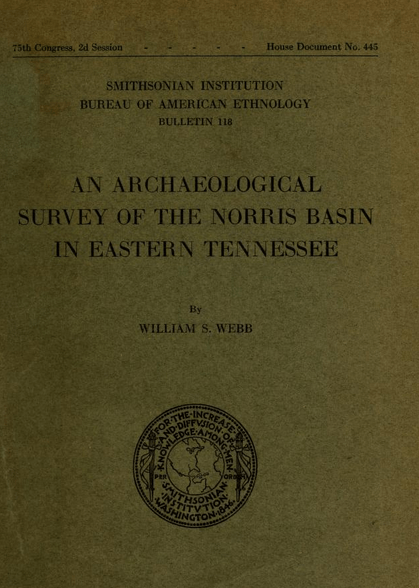
Further, the sites are well photographed, and it was from those photographs that the British expert was consulted (he never saw the site itself).
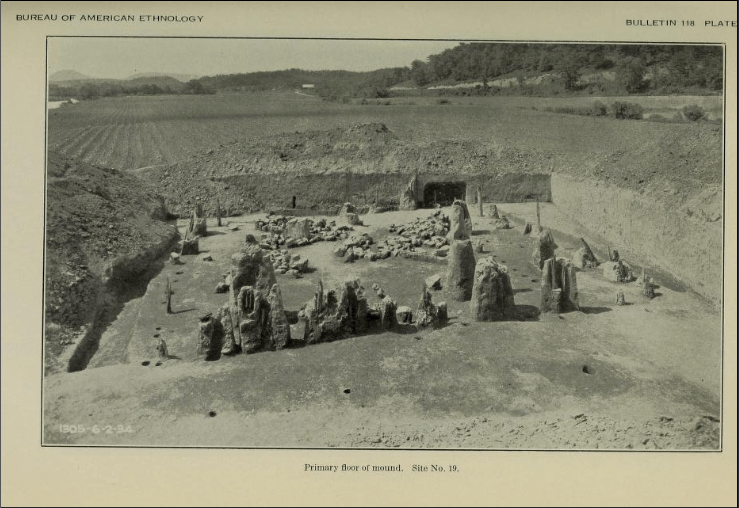
The temple itself (whether it was Egyptian, pre-Cherokee, or alien) is up to debate on its origins. What is terribly interesting is the mention in the video about the mound-builders and the history of the area with those who walked these lands…the Ani-kutani.
108. THE MASSACRE OF THE ANI′-KUTA′NĬ
Among other perishing traditions is that relating to the Ani′-Kuta′nĭ or Ani′-Kwăta′nĭ, concerning whom the modern Cherokee know so little that their very identity is now a matter of dispute, a few holding that they were an ancient people who preceded the Cherokee and built the mounds, while others, with more authority, claim that they were a clan or society in the tribe and were destroyed long ago by pestilence or other calamity. Fortunately, we are not left to depend entirely upon surmise in the matter, as the tradition was noted by Haywood some seventy years ago, and by another writer some forty years later, while the connected story could still be obtained from competent authorities. From the various statements it would seem that the Ani′-Kuta′nĭ were a priestly clan, having hereditary supervision of all religious ceremonies among the Cherokee, until, in consequence of having abused their sacred privileges, they were attacked and completely exterminated by the rest of the tribe, leaving the priestly functions to be assumed thereafter by individual doctors and conjurers.
Haywood says, without giving name or details, “The Cherokees are addicted to conjuration to ascertain whether a sick person will recover. This custom arose after the destruction of their priests. Tradition states that such persons lived among their ancestors and were deemed superior to others, and were extirpated long ago, in consequence of the misconduct of one of the priests, who attempted to take the wife of a man who was the brother of the leading chief of the nation.”
A more detailed statement, on the authority of Chief John Ross and Dr J. B. Evans, is given in 1866 by a writer who speaks of the massacre as having occurred about a century before, although from the dimness of the tradition it is evident that it must have been much earlier:
“The facts, though few, are interesting. The order was hereditary; in this respect peculiar, for among Indians seldom, and among the Cherokees never, does power pertain to any family as a matter of right. Yet the family of the Nicotani—for it seems to have been a family or clan—enjoyed this privilege. The power that they exercised was not, however, political, nor does it appear that chiefs were elected from among them.
“The Nicotani were a mystical, religious body, of whom the people stood in great awe, and seem to have been somewhat like the Brahmins of India. By what means they attained their ascendancy, or how long it was maintained, can never be ascertained. Their extinction by massacre is nearly all that can be discovered concerning them. They became haughty, insolent, overbearing, and licentious to an intolerable degree. Relying on their hereditary privileges and the strange awe which they inspired, they did not hesitate by fraud or violence to rend asunder the tender relations of husband and wife when a beautiful woman excited their passions. The people long brooded in silence over the oppressions and outrages of this high caste, whom they deeply hated but greatly feared. At length a daring young man, a member of an influential family, organized a conspiracy among the people for the massacre of the priesthood. The immediate provocation was the abduction of the wife of the young leader of the conspiracy. His wife was remarkable for her beauty, and was forcibly abducted and violated by one of the Nicotani while he was absent on the chase. On his return he found no difficulty in exciting in others the resentment which he himself experienced. So many had suffered in the same way, so many feared that they might be made to suffer, that nothing was wanted but a leader. A leader appearing in the person of the young brave whom we have named, the people rose under his direction and killed every Nicotani, young and old. Thus perished a hereditary secret society, since which time no hereditary privileges have been tolerated among the Cherokees.”
The above is from the book “The Myths of the Cherokee” a 1902 report by James Mooney. Fogelson, in his article in Eurohistory (1984) “Who were the Ani-Kutani” wrote:
According to James Mooney, knowledge of the Ani-Kutani was rapidly perishing
Who Were the Aní-Kutánî? An Excursion into Cherokee Historical Thought Raymond D. Fogelson
when he did his Cherokee population of mound builders who inhabited the territory prior to Cherokee incursion into their historic homeland. This theory is consonant with the widely shared belief that indigenous peoples retain a mystical connection with the land and its autochthonous spirits.
Ethnohistory Vol. 31, No. 4 (Autumn, 1984), pp. 255-263 (9 pages) Published By: Duke University Press
One of my favorite parts of this whole story is the idea that not only did the Cherokee consider these ostracized people as something more (the Alabama name Kitani means ‘Sorcerer’, but the Ani Kutani considered themselves something more. Per 1826’s “History of the Cherokee People”, by Cherokee leader Charles Hicks:
The Auh, ne, coo, tauh, nies (Ani-kutawni), or Proud,— professed themselves, as is stated by traditioners, to be teachers of Heavenly Knowledge from the Creation; and the manner of their introduction to the assembled people is represented to have been usually at night times and when he approached near them, the lights of their fires were extinguished, as it was well known to them when he came near, by frequently repeating the words Caul, lungh, luy, tee Tauk, che, lo, eh, (I am from above).”
There are many mysteries that lie within this area, it would be a shame to look at a more sensational answer to replace the fascinating depths of the real story.
 BYRD OF ILL OMEN